Instalación participativa y perfomance
César de Izuzquiza y Arturo Moya Villén
Año de producción: 2026
Estreno absoluto para Hybrid/Proyector
(english below)
Texto del video:
“Golem” es una instalación participativa con elementos de performance, que interroga las nuevas formas de transhumanidad surgidas con los dispositivos de captura digital.
La fijación volumétrica de cuerpos yerra cuando se enfrenta con el movimiento, cuando se abre al flujo de los seres en un espacio-tiempo determinado. A pesar de ser una tecnología reciente, en sus mimbres suspira aún la vieja inmovilidad eterna del kouros que se enfrenta al daguerrotipo.
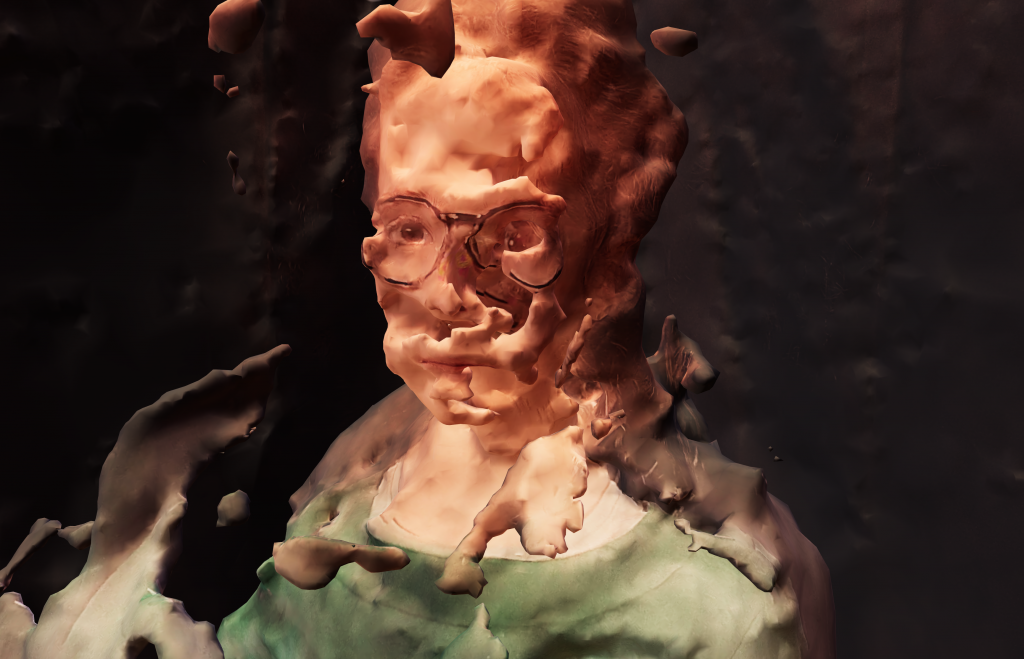
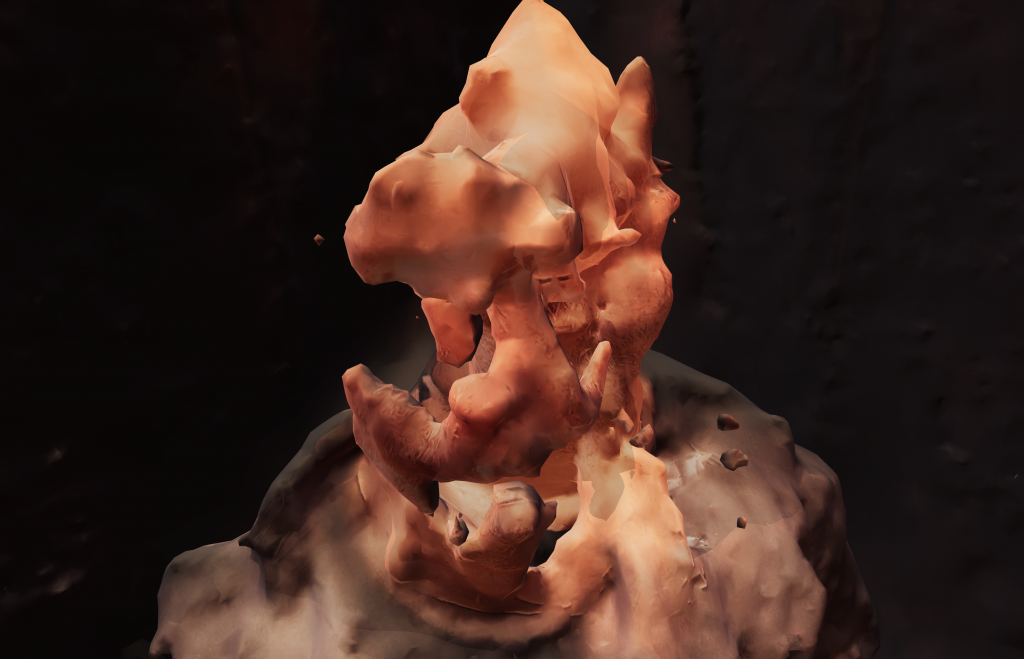
Bajo este impulso cinético, la tecnología abandona su sumisión a lo real y deviene un pincel imprevisible que estira, desgarra y recombina la materia. Se trasciende entonces el registro, para adentrarse en la creación de un ser simbiótico, una entidad colectiva que inaugura una categoría propia: un ser hecho de movimiento, difuso e inaprensible; un monstruo que convierte el desplazamiento en el espacio en un viaje a la infinidad del otro.
En esta amalgama de simbiontes, la monstruosidad no viene dada por la mezcla obscena de carnes, sino por la mismidad infinita que expulsa al otro porque lo fagocita. Nadie conserva su ser individual, todos son una sola y misma cosa heterogénea. El otro desaparece, el monstruo es la hipertrofia de una comunidad plena pero sin aire; emerge una imagen inquietante: una mismidad teratológica, pero quizás dócil, manejable para un mercado al acecho.
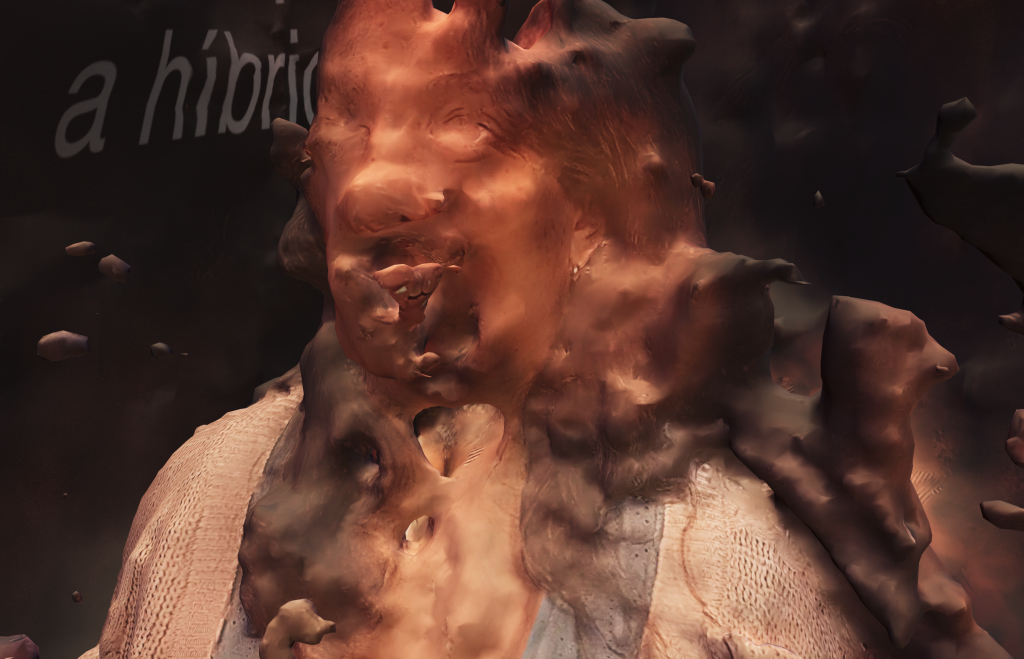
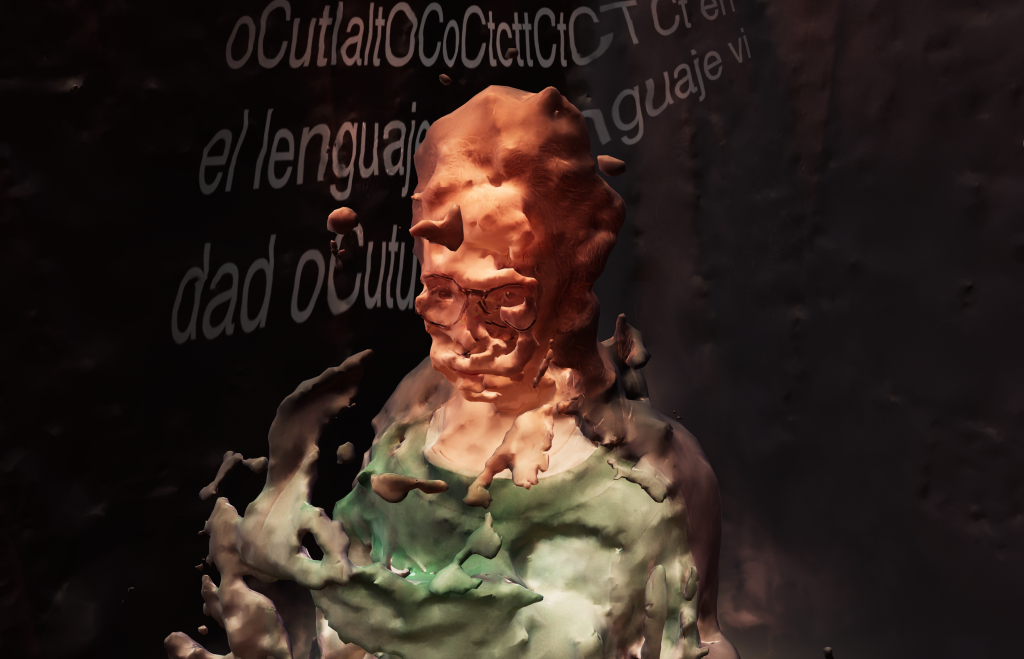
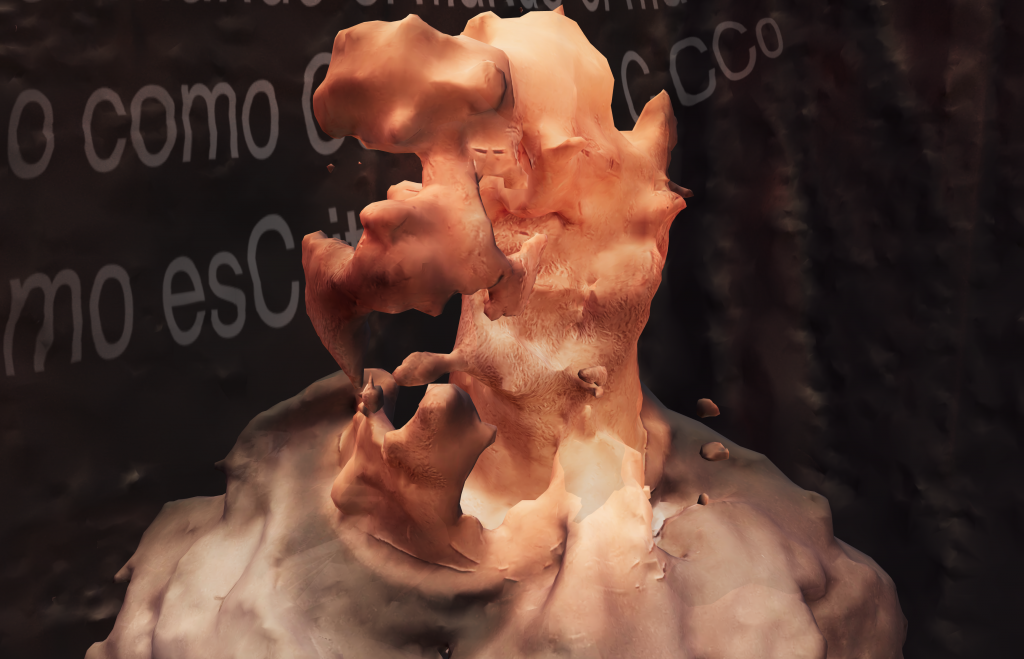
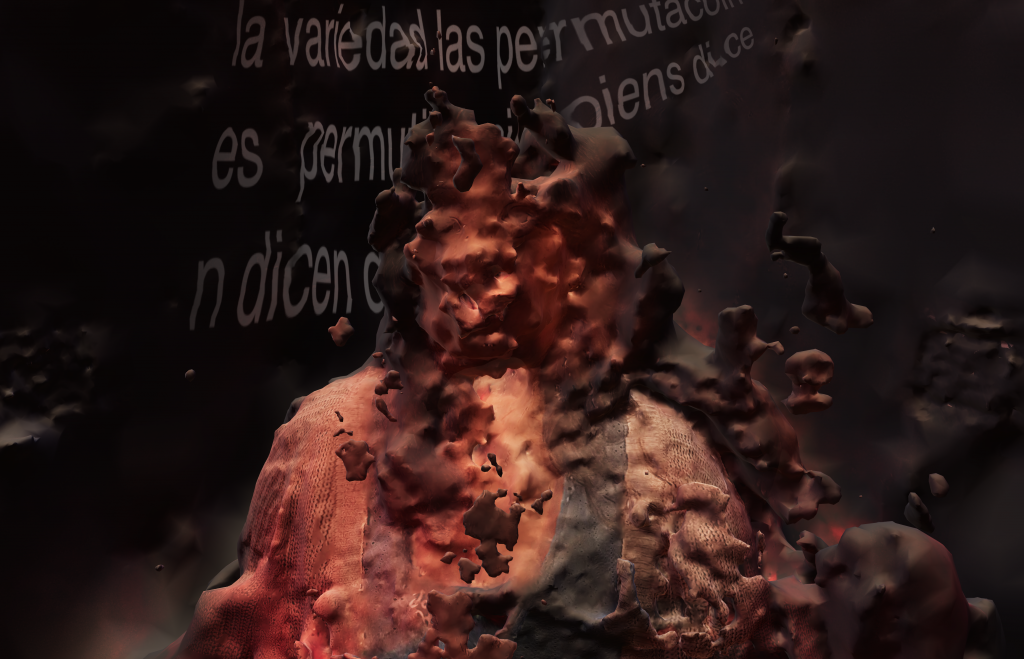
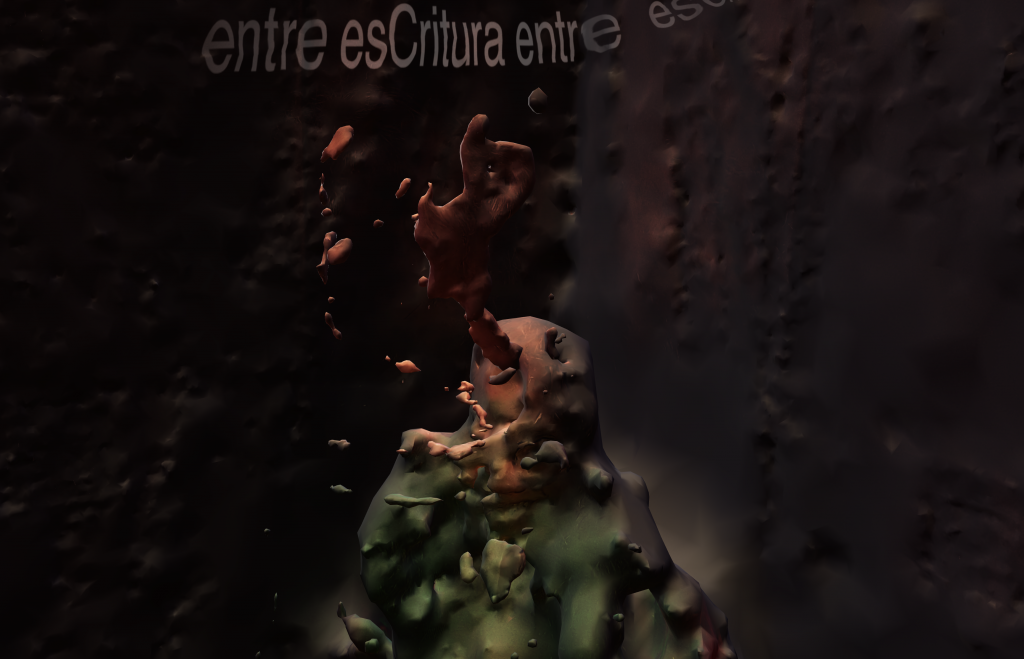
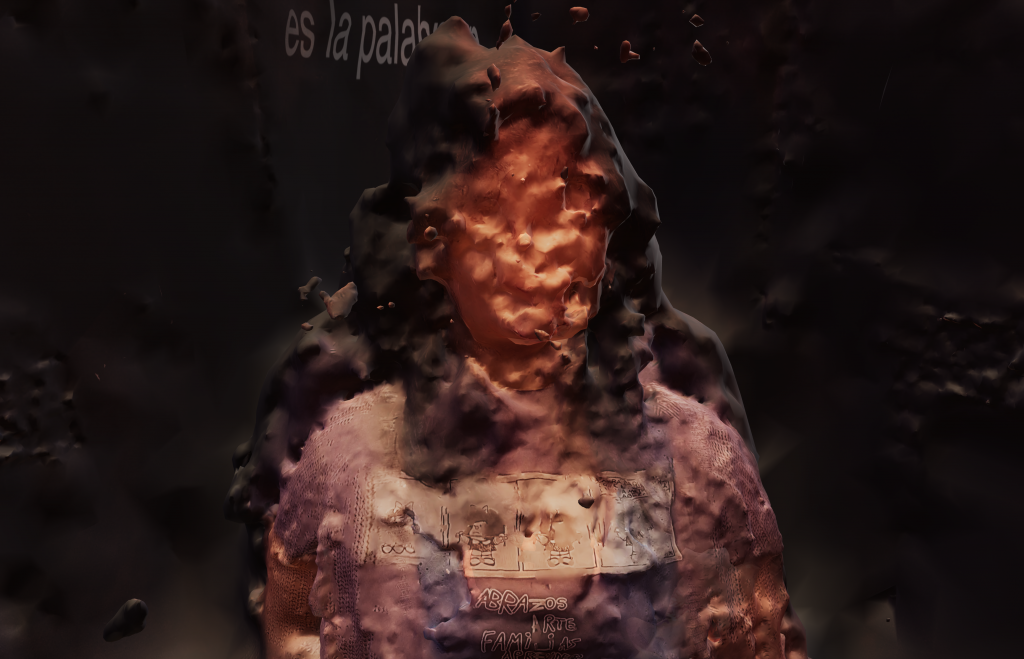
Este ente virtual se manifiesta como un Golem contemporáneo. En la tradición cabalística, la materia inerte cobraba vida mediante la imposición de la palabra emet (אמת): verdad. Su muerte se producía por la sustracción de la letra aleph. Emet se transformaba en met (מת) que significa “muerte”. La vida y su control estaban atadas al lenguaje, como letras de un ADN. En “Golem”, es el código el que actúa como verbo sagrado: da la vida, también bajo la presión de decir “verdad”, lo que despierta el compromiso ético y estético de la criatura, mientras se nombra la posibilidad de su misma muerte. El código se encuentra con las tensiones estructurantes que se concatenan entre la ficción y la verdad, entre el arte y la vida.
El procesamiento masivo de datos y la pronunciación de las palabras en la cábala actúan de la misma forma: ambas performan el mundo, moldean la materia al enunciarse. No lo describen, lo crean literalmente. El resultado es una criatura que encarna las fricciones de la ambivalencia técnica, un ser digital que se imbrica en los procesos de absorción socio-tecnológica que empujan ciegamente las sociedades hacia el futuro. Por esa razón el Golem ha sido leído como el antecesor de los robots o, más recientemente, de las IAs. Una misma herramienta que implanta las condiciones de posibilidad del nuevo mundo, mientras nos precipita al abismo de sus leyes. Un engendro sin palabra de control, una anomalía sin bozal.
De hecho, en “Golem” resuena con intensidad la idea de lo anomal, expresada por Deleuze y Guattari. La criatura digital no es un individuo ni una especie, sino un fenómeno de borde que cuestiona el sentido y el orden de un ser encerrado en un cuerpo único. Es un Cuerpo sin Órganos, por seguir la terminología de Mil Mesetas, carne liberada de su organización, pura potencialidad en la que el deseo puede fluir sin ser canalizado, como un avatar, pero sin posibilidad de apegarse a la nueva identidad alterizada. No es una anomalía por defecto, sino por desbordamiento; es la «banda» o el «devenir-animal» que se sitúa en la frontera del sistema, operando como un nexo entre múltiples cuerpos. “Golem” es un laboratorio de experimentación donde el sujeto se disuelve y transforma, y el devenir-animal-monstruo opera como un factor de desestabilización de nuestras ideas sobre los límites de lo humano.
Descripción técnica
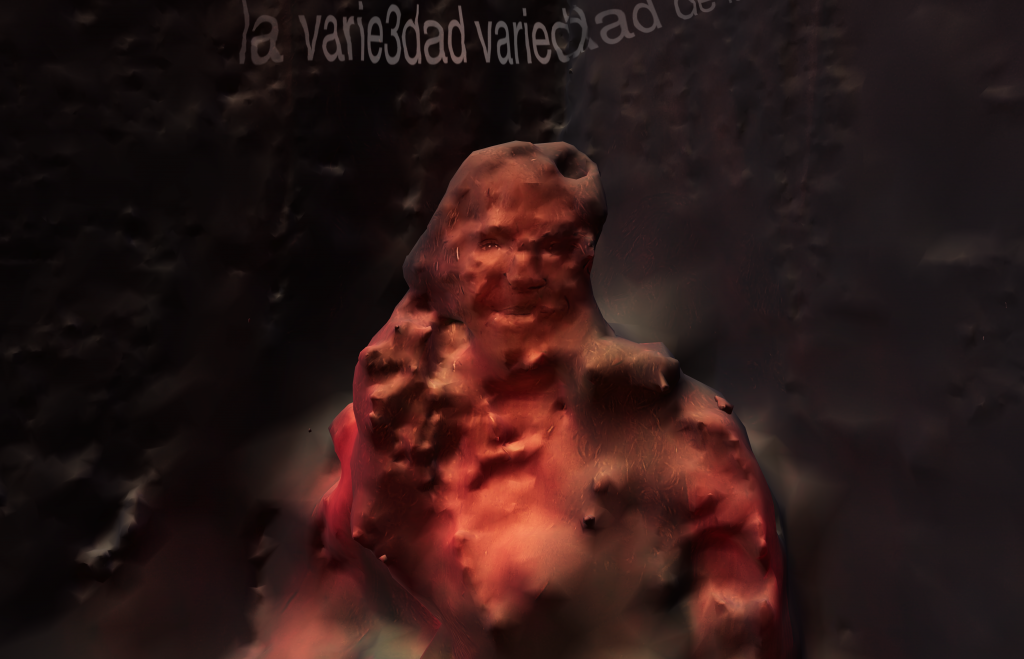
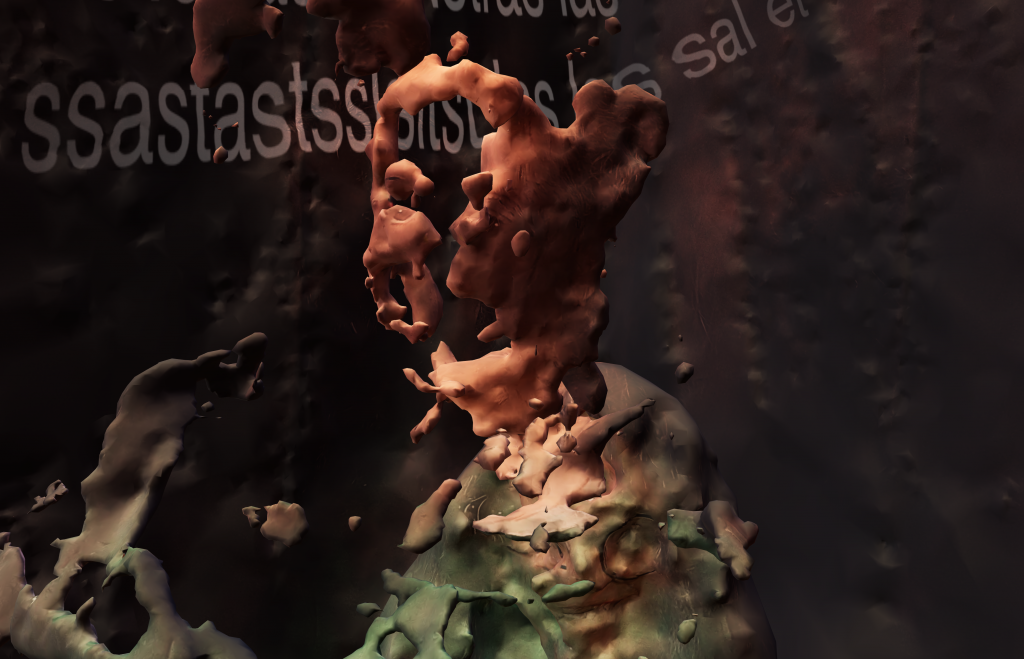
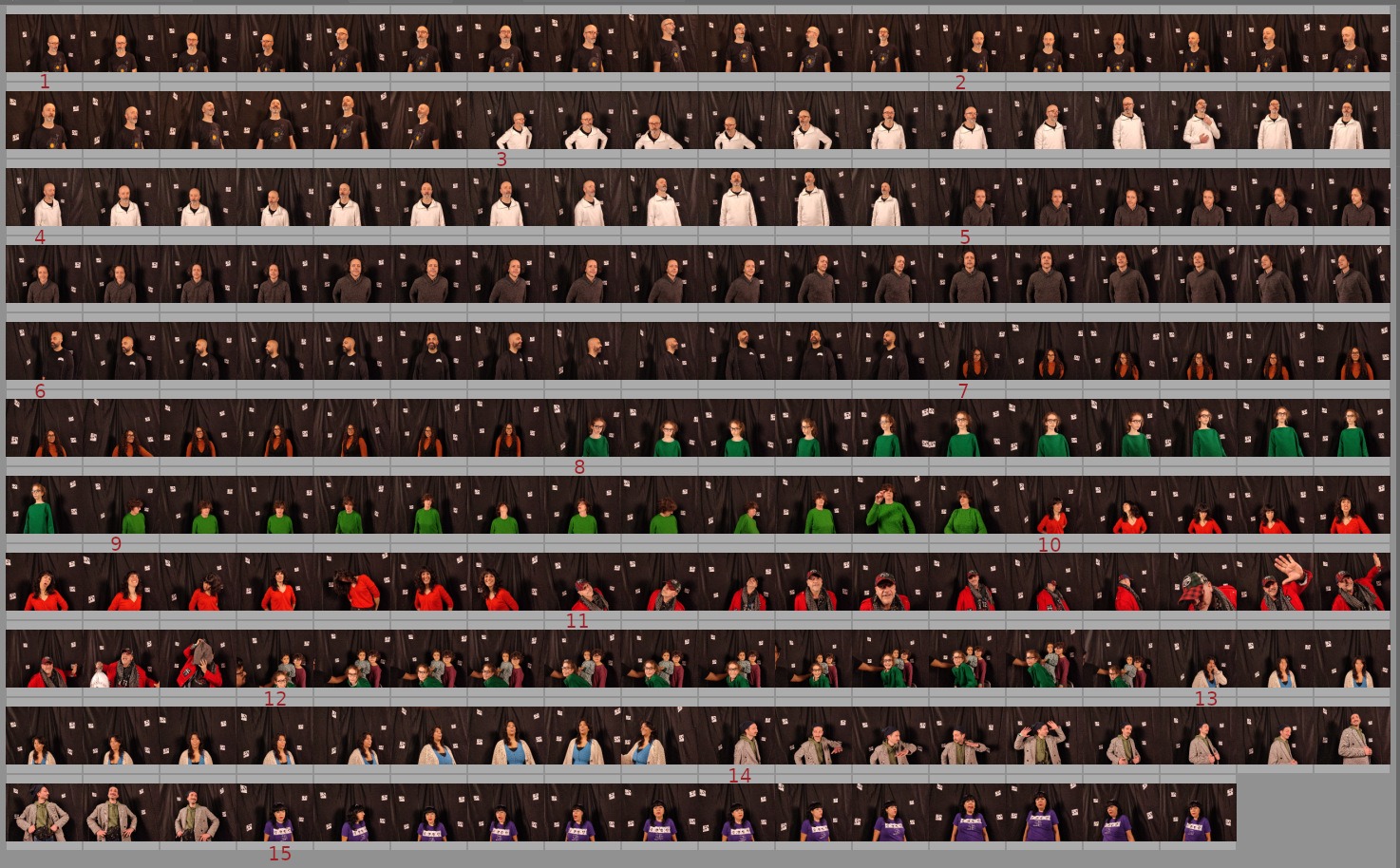
Golem se presentó en forma de instalación participativa y performance. Los asistentes fueron escaneados en directo en 3D mediante la toma de fotografías desde diferentes perspectivas. Los modelos 3D que se mostraron posteriormente fueron el resultado de mezclar los escaneos de las personas que participaron.
Desde el punto de vista sonoro, las palabras pronunciadas por el público fueron recogidas por un performer que hacía la función de un escriba contemporáneo, copiando las palabras y proyectándolas en forma de video en vivo. Las letras fueron sometidas a procesos de permutación, de forma semejante a como sucede en el Tziruf de la cábala.
English:
On-screen text:
“Golem” is a participatory installation with performance elements that interrogates the new forms of transhumanity emerging from digital capture devices.
Volumetric body fixation fails when faced with movement—when it opens itself to the flow of beings within a specific space-time. Despite being a recent technology, the old, eternal immobility of the kouros facing the daguerreotype still sighs within its framework.
Under this kinetic impulse, technology abandons its submission to the real and becomes an unpredictable brush that stretches, tears, and recombines matter. It transcends mere recording to delve into the creation of a symbiotic being, a collective entity that inaugurates its own category: a being made of movement, diffuse and elusive; a monster that transforms displacement through space into a journey toward the infinity of the other.
In this amalgam of symbionts, monstrosity is not derived from an obscene mixture of flesh, but from an infinite sameness that expels the other by phagocytizing them. No one retains their individual self; everyone is a single and same heterogeneous thing. The other disappears; the monster is the hypertrophy of a full but airless community. An unsettling image emerges: a teratological sameness—perhaps docile, and manageable for a lurking market.
This virtual entity manifests as a contemporary Golem. In the Cabalistic tradition, inert matter came to life through the imposition of the word emet (אמת): truth. Its death occurred by removing the letter aleph. Emet was transformed into met (מת), meaning «death.» Life and its control were tied to language, like letters of DNA. In “Golem,” it is the code that acts as the sacred verb: it gives life, also under the pressure of speaking «truth,» which awakens the creature’s ethical and aesthetic commitment while naming the possibility of its own death. The code meets the structuring tensions that concatenate between fiction and truth, between art and life.
The massive processing of data and the pronunciation of words in the Kabbalah act in the same way: both perform the world, molding matter as they are enunciated. They do not describe it; they literally create it. The result is a creature that embodies the frictions of technical ambivalence—a digital being interwoven with the processes of socio-technological absorption blindly pushing societies toward the future. For this reason, the Golem has been read as the ancestor of robots or, more recently, of AI. A single tool that implants the conditions of possibility for the new world while plunging us into the abyss of its laws. A monstrosity without a control word, an anomaly without a muzzle.
In fact, “Golem” resonates intensely with the idea of the anomal, as expressed by Deleuze and Guattari. The digital creature is neither an individual nor a species, but a border phenomenon that questions the meaning and order of a being enclosed in a single body. It is a «Body without Organs,» to use the terminology of A Thousand Plateaus—flesh liberated from its organization, pure potentiality where desire can flow without being channeled; like an avatar, but without the possibility of attaching itself to a new, othered identity. It is not an anomaly by default, but by overflow; it is the «pack» or the «becoming-animal» situated at the system’s frontier, operating as a nexus between multiple bodies. “Golem” is an experimental laboratory where the subject dissolves and transforms, and the becoming-animal-monster operates as a destabilizing factor for our ideas regarding the limits of the human.
Golem was presented as a participatory installation and performance. Attendees were scanned live in 3D using photographs taken from different perspectives. The 3D models subsequently displayed were the result of merging the scans of the participants.
From a sonic perspective, the words spoken by the audience were collected by a performer acting as a contemporary scribe, copying the words and projecting them as live video. The letters underwent permutation processes, similar to the Tziruf in the Kabbalah.